
 Start Paddle Finder
Quick Takeaways
- The JOOLA Perseus is a lighter, more maneuverable pickleball paddle built for all court players who need faster hand speed at the kitchen line.
- The JOOLA Hyperion carries a higher swing weight and head heavy balance, giving power players more pop and plow through on drives.
- Both are thermoformed paddles with carbon fiber surfaces, but the Perseus Pro uses a unibody build for better stability and durability.
- The Hyperion offers a larger sweet spot and more forgiveness on off center contact, while the Perseus rewards accuracy with a stable feel.
- JOOLA's Pro IV paddles introduced both lines, and the Pro V generation refined shapes, materials, and edge design.
- Ben Johns helped shape the Hyperion's development, but both JOOLA paddles perform well across playing styles.
Choosing between two JOOLA pickleball paddles that share the same brand DNA can feel tricky. The JOOLA Perseus vs Hyperion debate comes up constantly among players shopping for their next pickleball paddle, and the answer depends on how you play.
These two paddles sit at the top of JOOLA's lineup, spanning the Pro IV line and into the current Pro V generation. Ben Johns brought attention to the Hyperion through competition, and the Perseus has built its own loyal following among control oriented players.
The Hyperion leans into power and spin with a head heavy shape that rewards aggressive swings. The Perseus prioritizes speed and more control with a lighter frame built for quick hands battles. This guide breaks down the real differences across shape, swing weight, performance, and durability so you can figure out which paddle matches your game.
How the Pro IV and Pro V Lines Evolved
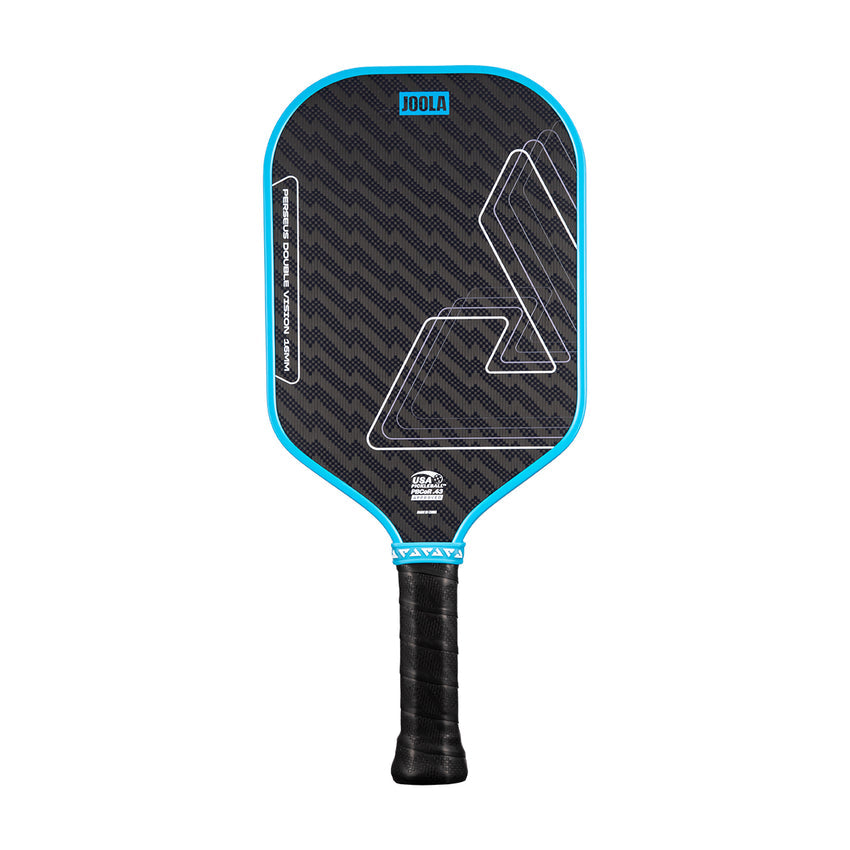
JOOLA launched both the Perseus and Hyperion as part of the JOOLA Pro IV line, which became one of the most talked about releases in the sport. The Pro IV paddles were thermoformed paddles that featured reactive polymer cores and JOOLA's Carbon Friction Surface. Ben Johns was competing with the Hyperion when the Pro IV dropped, and his results helped drive demand. The Pro IV line gave players two distinct options: the Perseus for control and stability, and the Hyperion for aggressive power play.
The JOOLA Pro V generation refined everything the Pro IV line started. The JOOLA Pro V paddles improved how the surface responds on contact and expanded shape options to include elongated paddles, standard builds, and hybrid shapes.
Ben Johns continued using the Hyperion Pro V for tournament play, while the Perseus Pro V earned a following among players who wanted a balanced feel with more control. Today, JOOLA continues to evolve both lines with releases like the Perseus Double Vision, which uses an Aramid Carbon Fiber surface for softer touch and improved durability.
Shape, Swing Weight, and Handle Length Compared
The biggest visible difference is shape. The JOOLA Hyperion uses a curved top elongated design with a head heavy balance. That extra weight toward the top edge creates a higher swing weight, which translates into more pop and more power on full swings.
Tennis players often gravitate toward the JOOLA Hyperion because the elongated shape mirrors the feel of a racket. Elongated paddles like this also offer more reach during net play and overheads.
The JOOLA Perseus sits in a hybrid shape that's slightly more compact. It's lighter and more maneuverable, giving players faster hand speed and more control during quick exchanges. The Perseus paddle face is 16mm thick in most configurations.
The handle length at 5.5 inches supports two handed backhands, and the lower swing weight lets you whip through the contact zone with speed.
| Spec | JOOLA Perseus | JOOLA Hyperion |
|---|---|---|
| Shape | Hybrid / Slightly compact | Elongated / Curved top |
| Average Weight | ~7.8 oz | ~7.7–8.6 oz (by model) |
| Core Thickness | 16mm | 14mm or 16mm |
| Surface | Aramid Carbon Fiber | Carbon Friction Surface |
| Handle Length | 5.5 in | 5.5 in |
| Balance | Balanced / neutral | Head heavy |
| Construction | Thermoformed unibody | Thermoformed |
The Hyperion's elongated build provides more reach, while the Perseus's balanced weight keeps the pickleball paddle maneuverable at the kitchen line. Handle length is identical, so the choice comes down to head shape and swing weight.
Power, Spin, and Control on the Court
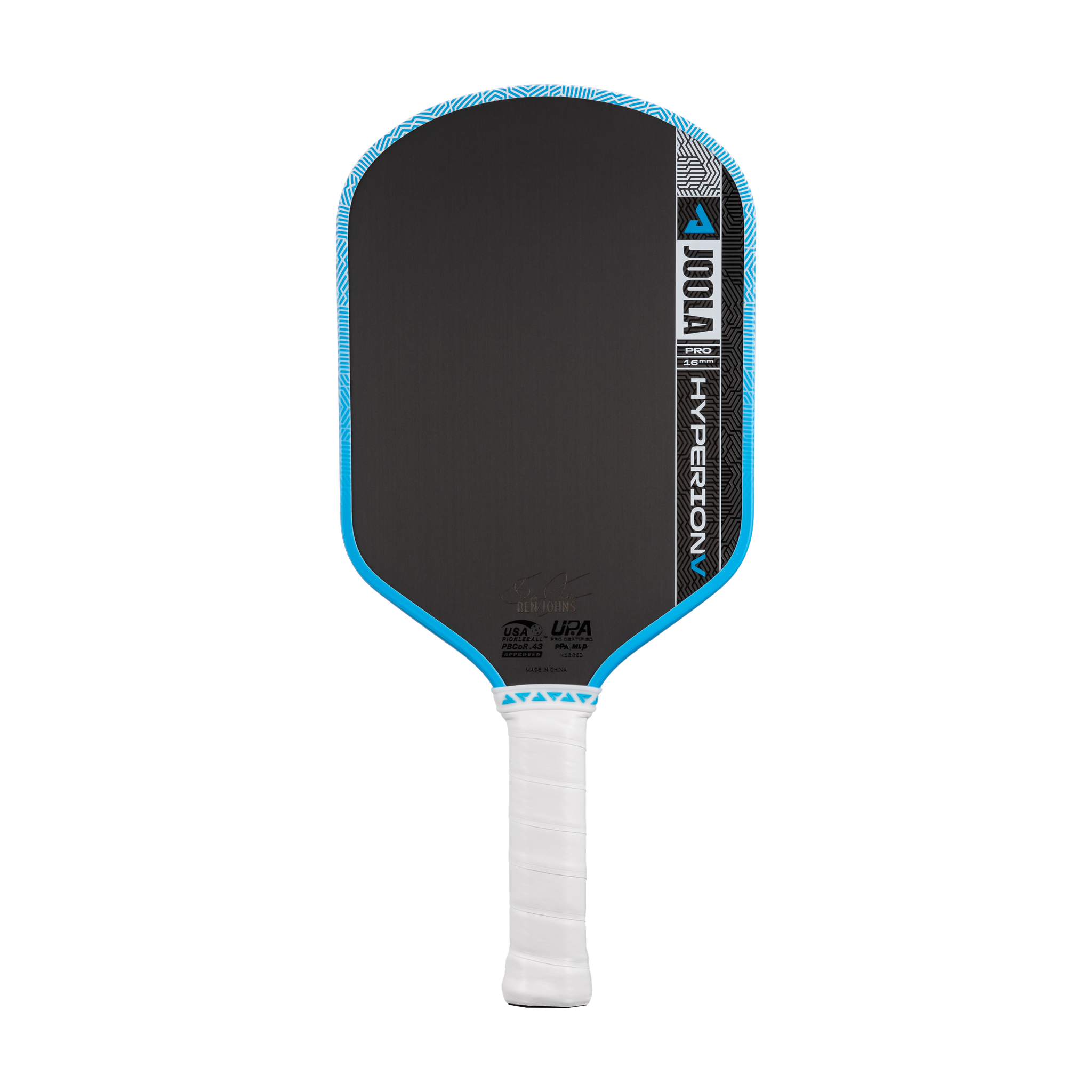
For raw power, the Hyperion has the edge. Its head heavy design and higher swing weight let power players generate more energy on contact, producing drives that plow through with authority. The extra weight gives you more pop on full swings, and Ben Johns has shown what that power looks like at the highest level. Power players who step into their shots will feel the difference right away.
The Perseus isn't built as a power paddle, but it delivers plenty of pop when you need it. Because it's lighter, you can get into position faster during hands battles, and the balanced feel helps you place shots with precision. Most players who pick the Perseus care about better control during rapid exchanges at the kitchen line.
Spin is strong on both pickleball paddles. The Hyperion produces a bit more spin thanks to its Carbon Friction Surface. The Perseus's Aramid Carbon Fiber still grips well and produces consistent rotation on drops, serves, and drives. For control, both deliver clean, stable contact. The Hyperion's larger sweet spot offers better forgiveness, while the Perseus rewards centered hits with a predictable response. Dwell time on both paddles lets you shape shots with intention.
Browse the full selection of JOOLA pickleball paddles at Get2Eleven to compare the Perseus and Hyperion side by side.
Sweet Spot, Forgiveness, and Durability
Durability has been part of the conversation since both paddles launched. The Hyperion had reported handle breakage issues in early Pro IV models, and JOOLA addressed those concerns in later Pro V iterations.
The Perseus was designed with durability from the start. It features a fully encased carbon unibody build that adds stability and eliminates weak points at the neck and edge. JOOLA claims the Perseus won't suffer from core crush issues that affect some thermoformed paddles over time.
The Hyperion's edge guard and foam injection protect the paddle face, but the Perseus Pro's unibody construction holds up longer under heavy, power driven play. If you put your paddle through aggressive rallies, the Perseus gives you more confidence in longevity.
Forgiveness is where the two paddles diverge most. The Hyperion's larger sweet spot helps intermediate players who haven't dialed in their contact point. Off center contact still produces a reasonable response.
The Perseus has a tighter sweet spot that rewards accuracy but can feel less forgiving. Players with solid mechanics will appreciate the Perseus's responsiveness. Those still building consistency may find the Hyperion more forgiving. For more on how thickness affects feel, check out the 14mm vs 16mm pickleball paddle comparison.
Which JOOLA Paddle Fits Your Playing Style?
Picking between the JOOLA Perseus vs Hyperion comes down to how you approach the game. Here's a breakdown by player type.
Power players who rely on aggressive drives will prefer the Hyperion. Its head heavy balance and higher swing weight give you momentum to generate serious power from the baseline and finish points at the net with authority. Ben Johns plays with this shape because it lets you plow through on every stroke.
All court players who move between offense and defense will lean toward the Perseus. It's lighter, more maneuverable, and gives you faster hand speed during rapid exchanges. The Perseus is the right choice for all court players who want a pickleball paddle that adapts to their game rather than dictating it.
Tennis players making the switch often find the Hyperion comfortable because the elongated shape and extra weight mirror a racket. The swing mechanics translate naturally, and the handle length supports a two handed backhand.
Players developing their game may prefer the Hyperion's forgiveness, while those with solid fundamentals will get more from the Perseus Pro's responsive feel. If you're interested in how other top carbon fiber pickleball paddles compare, that guide covers several paddles across different brands.
What to read next:
- 14mm vs 16mm Pickleball Paddle: Find Your Best Match
- 10 Best Carbon Fiber Pickleball Paddles in 2026
- How to Hold a Pickleball Paddle
Ready to feel the difference? Shop the JOOLA collection at Get2Eleven or visit us at Bobby Riggs Racquet & Paddle in Encinitas, CA to try both paddles on court before you buy.
JOOLA Perseus vs Hyperion FAQs
Which JOOLA Perseus Is Banned?
Some earlier JOOLA Pro IV paddle models, including certain Perseus configurations, were removed from the USA Pickleball approved list due to performance testing standards. If you're competing in sanctioned events, check the current approved list on the USA Pickleball website before playing. The Perseus Double Vision currently at Get2Eleven is USAP PBCoR.43 Certified.
Which JOOLA Pickleball Paddle Is Best?
There's no single best JOOLA pickleball paddle because each model targets a different playing style. The Hyperion is best for power players who want more spin, more power, and more pop. The Perseus is best for all court players who need a maneuverable paddle for hands battles and controlled placement. It depends on your priorities.
What Is the Alternative to the JOOLA Perseus?
If you like the Perseus's balanced feel and better control but want to explore other pickleball paddles, models like the Selkirk LUXX and CRBN 2X offer similar control oriented profiles with different surface textures. Within JOOLA's own lineup, the Scorpeus line (Collin Johns' signature) provides another option with a slightly different shape and balance.
Is JOOLA Perseus Good for Beginners?
The Perseus can work for beginners who want a paddle they can grow into. Its lighter weight and balanced shape make it manageable, but the tighter sweet spot means beginners might struggle with consistency early on. For newer players who prefer more forgiveness, the Hyperion or one of JOOLA's entry level paddles like the Radius 15mm may be a better starting point.


